
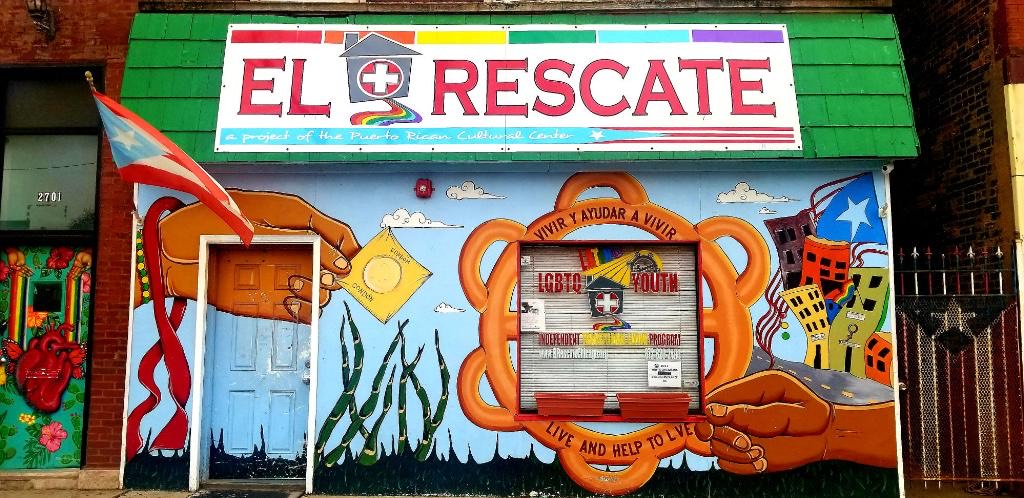

Zenaida Lopez grew up in a house with no electricity, but full of heart. Lopez and her two brothers are co-founders of the Puerto Rican Cultural Center. Lopez is also the director of El Rescate, a transitional living program for LGBTQ+ and HIV–positive youth.
Lopez talks about the struggles of LGBTQ+ youth in Chicago and what El Rescate doing to help:
When did you start working with El Rescate?
I’ve been at El Rescate since we opened it in 2012 with the Puerto Rican Cultural Center, the umbrella organization. I’ve been involved in it all my life because my brothers are the co-founders of the PRCC, and it’s been around for almost 50 years. I love what I do. As a lesbian woman, growing up, I could never be who I was. It was dangerous to be gay. I lived a life of sadness and tears.
Now, I see these children and they are so secure and so accepting of their sexuality. They say, ”I don’t care if you kick me out. I’m gay and that’s what I’m going to be.” I just applaud that because I never had that opportunity. That was one of the reasons I wanted to embrace these individuals with a safe place, meet their basic needs and to make sure that they would not be marginalized anymore.
Why is El Rescate specifically dedicated to LGBTQ+ youth?
The PRCC has been addressing all kinds of issues like high rates of asthma, diabetes and breast cancer. We looked at another issue affecting our communities—homelessness. The park is right up the street and we had a lot of kids that were sleeping there who happened to be LGBTQ+, whose parents were not accepting of their sexuality.
Several members of the PRCC are LGBTQ+ and we saw the need. But, we weren’t going to tackle just homelessness. We wanted to work with the most marginalized group, which is LGBTQ+ and HIV-positive youth. That’s what our focus was. We opened the place with no money, but we had space, and eight years later we created a very strong, wonderful organization.
What is the process for getting into El Rescate?
Because we’re not a shelter—we’re a transitional living program—everybody that comes through the doors has to be screened. We have an interview and they have to fill out an application. That’s how we did determine possible residency. I have 17 to 18 kids here; not every youth who’s homeless is a candidate for El Rescate. They have to be ready to change the trajectory of their life. We have to have a certain amount of beds available for HIV-positive youth because most of them don’t have any linkage to care. They get a probationary period of 30 days, and they have to have a job. If I see that they’ve been trying, then we extend it. Some kids want to go to school, and they can, but they have to get a part-time job. We create an action plan for them and they’re assigned a case manager.
What case has stood out to you the most?
One of my dearest and most memorable situations with the resident was this young man who came here from Lebanon, where homosexuality is very frowned upon. His family moved to Michigan, and he was afraid about his sexuality, so he left his family and came to live in Chicago with a friend of his. Then after a week, his friend told him ”I can’t keep you, you’ve got to go.” He had nothing and nowhere to go, and then he showed up at our door. I interviewed him—a very sweet, kind young man. So, we gave him a room, then he got a job at the Middle Eastern restaurant and registered for school.
He graduated college and he had a bachelor’s degree from Kendall College and had $8,700 saved up. I helped him find an apartment and we provided him with the first month’s rent for free and the deposit. He just kept working and doing everything until he graduated. We created such a wonderful relationship.
He said to me, and this is the most beautiful thing: “You know I’m graduating, and nothing will make me happier than for you to come to my graduation. I don’t care if my parents are there or not, but you are the most important person in my life and I need you to be there.” He gave me a ticket and I went.
This story has been edited for clarity.