

You come to Peru, you leave with alpacas
UP IN THE ANDES in the Peruvian region of Cusco, Quechua people work to make intricate patterns using alpaca wool. Each handmade sweater, table runner and scarf is given hours of concentration, becoming one of a kind. It is part of a long tradition of weaving passed down by word of mouth.
The results are stunning.
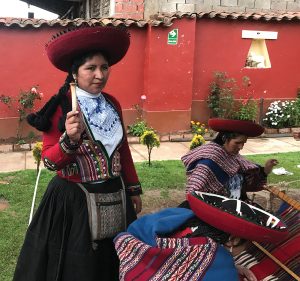
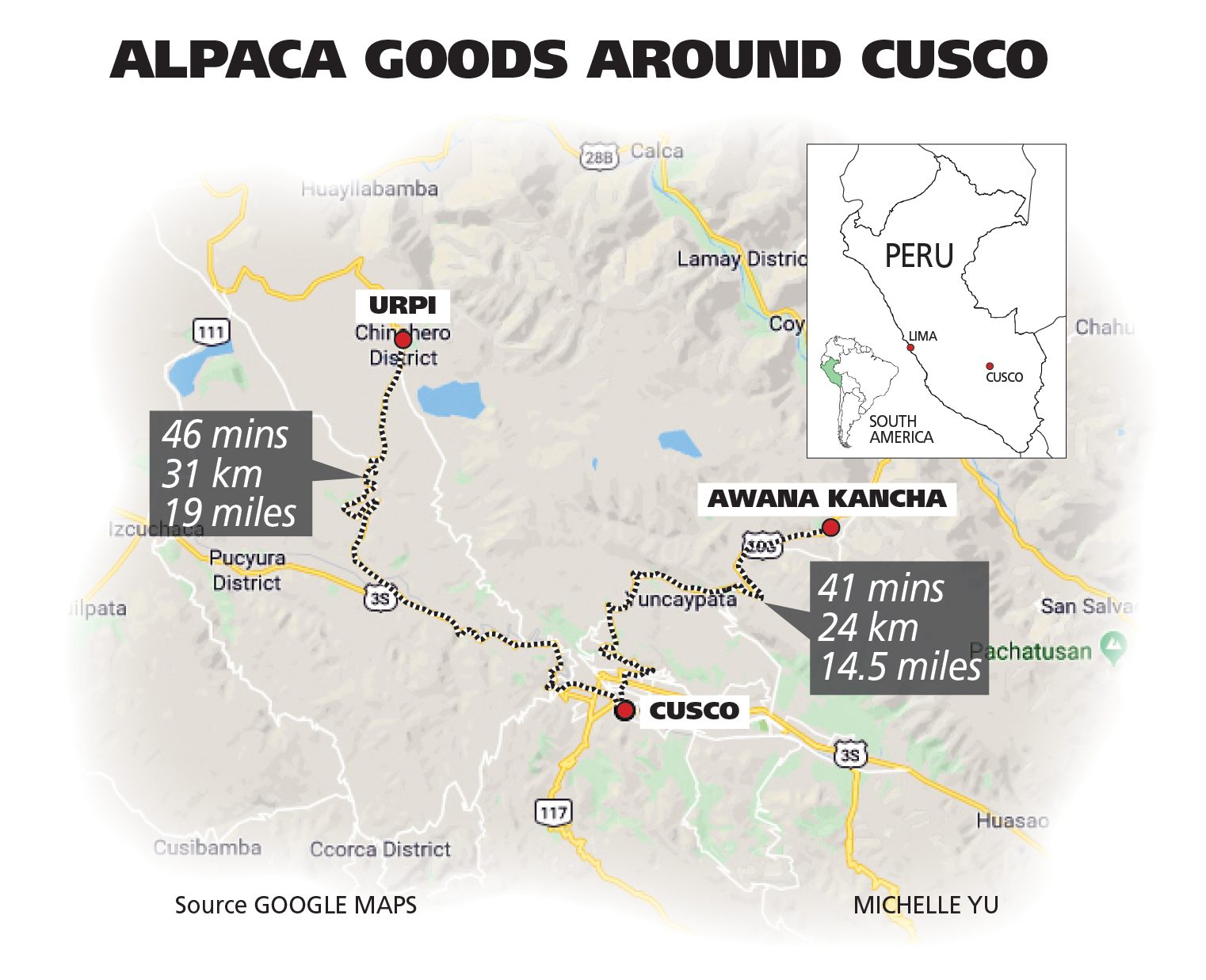
Chaska Quispe, a Quechua woman working at Urpi Textiles in the small town of Chinchero (19 miles northwest of Cusco,) stands in front of us and describes the entire process, from shearing the alpaca wool, to washing, kneading, dyeing and knitting.
Another woman offered all of us, a group of Columbia College Chicago students, a clay cup with “muña,” (MOON-yah) a hot mint-like tea, which it is said to be good for digestion. One of my classmates asks why only the women workers do this. She laughs and says, “Because men are not smart enough!” Instead, the men of the community participate more in the farming and shearing of the alpacas, as opposed to the assembling of textiles, Quispe explains.
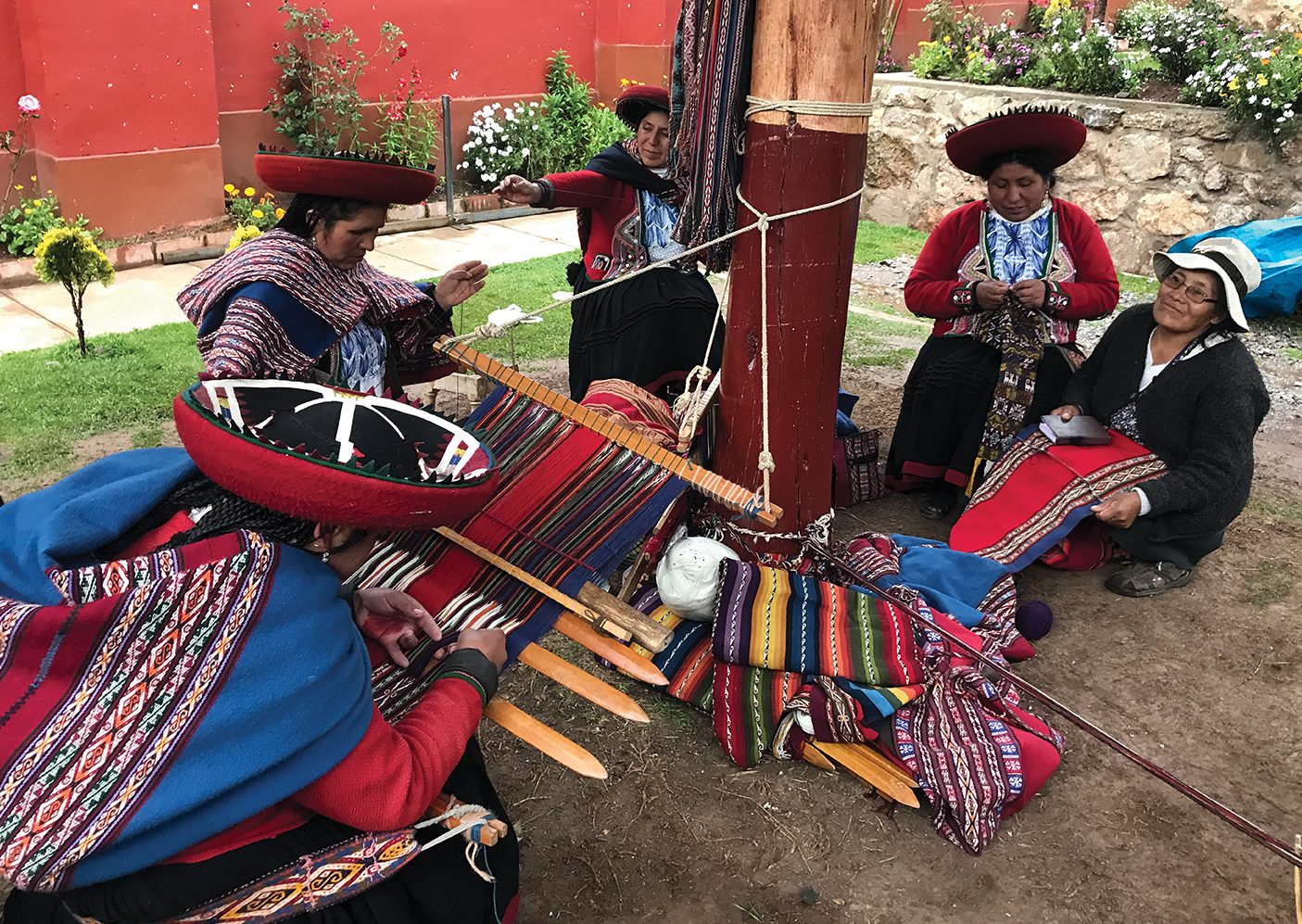
The women of this community in Chinchero sit in a huddled circle talking to one another as they weave their pieces together. Quispe shows us a table runner, made of intricate patterns and vibrant colors. Tightly knit, she tells us this textile might take up to six weeks to make. A sweater would take maybe a month, while smaller items like socks or scarves only a week or two.
Despite Chaska’s accusation of men’s lack of skill when it comes to garment making, Mateo Quispe (no relation to Chaska Quispe) proved to be able to do the work perfectly.
His family is a part of the Awana Kancha cooperative near the rural town of Pisac, 14.5 miles northeast of the city of Cusco. It unites 14 families from the surrounding area who participate in farming and collecting alpaca wool. Mateo says he has helped his family members weave since he was 13. Now in his 30s, he is allowed to design his own garments.
Unlike Urpi Textiles, Awana Kancha offers more designer-like styles that are more expensive. The cooperative offers a greater variety of wool and patterns. Located on the road between Cusco and the Sacred Valley, Awana Kancha has evolved to draw in as many tourists as possible. The company has its own website advertising a petting zoo and intricate weaving displays. The company also boasts a four-and- a-half star rating on the acclaimed travel website Trip Advisor.
Urpi textiles, on the other hand, caters to a different tourist demographic of customers looking for alpaca goods with that handmade touch, but that is not expensive and does not sell exclusive designs.The company is primarily found by customers through word of mouth. The saleswomen bombard potential buyers with deals for warm alpaca wool garments at an eighth of the price of those offered at Awana Kancha.
According to a Cusco native and experienced tour guide, Paulo Puma, alpaca is the animal of choice when it comes to garment making. The wool of the lama tends to be too coarse, he said. Those with more money prefer wool from the vicuña, a close relative of the alpaca, with its extremely soft and fine wool, which can be sheared only every three years, making it more desirable and much more expensive.
Awana Kancha offers the exclusive and luxurious vicuña sweaters for the steep price of 900 soles, or $300, and alpaca sweaters for 250 soles or $80. Shops like Urpi textiles tend to be less expensive, and offer only alpaca sweaters for around 80 soles, or $25. There are, of course, differences in quality, but for the regular visitor, each garment looks unique.
Tourists come from all over the world to visit Peru and leave with beautiful textiles. The people who put their heart into these alpaca wool garments have made them world famous.