


Aguas Calientes, a required stop on the way to Machu Picchu, is quaint and chaotic.
DESPITE BEING WEDGED between Peru’s lush green mountains along the Urubamba river, Aguas Calientes is not the destination people travel across the world to see.
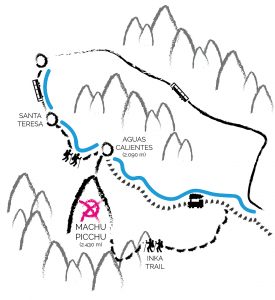
Sitting at the base of Machu Picchu, this tiny town of less than 2,000 inhabitants is a necessary stop along the way for travelers journeying to the UNESCO World Heritage Site. Although it existed as a train station before Hiram Bingham’s announcement of Machu Picchu’s “discovery” in 1911, the town slowly grew to accommodate tourists.
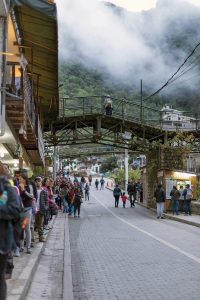
With only two main streets, Aguas Calientes primarily houses souvenir shops, restaurants and hotels to cater to the tourist industry that began to thrive in the 90s. Its name, meaning “hot springs” in Spanish, is derived from a common activity for hikers who have completed their visit to Machu Picchu. However, many reviews online have reflected some disappointment on the small pools, which suggests the hot springs are not appealing enough to bring in tourists on their own.
Like many other travelers passing through, I barely gave any thought to the town of Aguas Calientes. To be honest, it wasn’t until I was on the trip that I realized Machu Picchu must have some kind of town nearby to cater to such a big crowd in the middle of these opulent mountains. I was fascinated with how the small town had started out as a train station and then began building on top of itself to make money off of Peru’s most famous destination, but I was much more concerned about Machu Picchu.
Our group, which included six college students, an instructor and a tour guide, tried to make the most of the town in between grand adventures.
I had been very aware of how prevalent tourism is in Peru, but this town amplified that. Everything I had read online about the town was verified.
When first entering Aguas Calientes, only accessible by train, you are then forced to walk through the town’s market, very similar to the other markets we had seen throughout Peru, with vendors offering prices for bags and shirts that you could most definitely find cheaper somewhere else.
Most of the buildings are occupied by tour companies, small convenience stores selling everything you may need for your hike around Machu Picchu, restaurants, hotels and hostels and small massage places that you can visit if you are sore after hiking. Even though prices for everything here are still slightly cheaper than the United States, they were more expensive than in most of the country.
Down every street you walked, no matter what you were actually looking for, restaurant owners approached you, promising “happy hour four for one,” a better menu than the place across the way or bargained prices that rose much higher when an unexpected service tax was included.
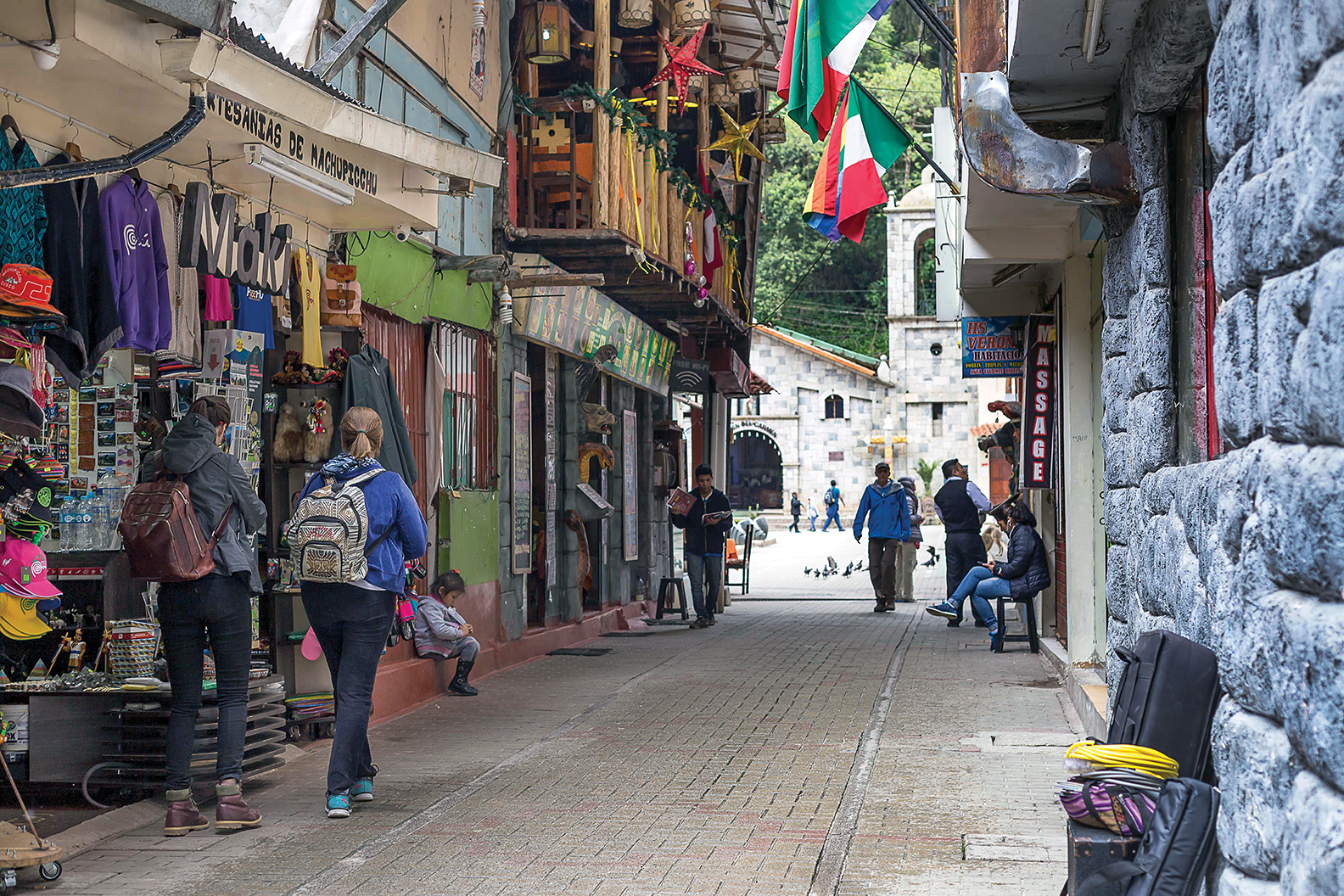
Our group soon learned that the menus and deals were pretty much all the same even though the vendors were open to bargaining off the service tax once in awhile. But of course, these deals were given only to those familiar with the town’s customs, like our guide Paulo Puma. Having visited many times while guiding tour groups, Puma knew the town’s maze-like streets like the back of his hand.
When asked about the town, he said that because Aguas Calientes is so inaccessible yet made such a profit off of tourism, those who own property there got between 400 to 500 soles (3.25 soles to US$1) per month from the town’s municipality to stay and work. In fact, according to Puma, when a competitor tried to establish a new company of buses to take visitors up to Machu Picchu—5.5 miles away and 1,200 feet higher— the locals reacted, feeling threatened by the competition.
So the townspeople gathered together and rented the train to Cusco to keep the monopoly on jobs for local residents. Many know about the money given to the people of Aguas Calientes and move to the town and buy land to make a living, Puma said.
Along with staying at a hotel we planned to visit the hot springs, for which the town is named. This has become another stop for tourists who want to relax after the taxing hike at Machu Picchu.
The hot springs advertise the healing properties of the water, promising to relax every muscle in your body and to rejuvenate your skin.
The short 10-minute hike further into the mountains along the river was beautiful. After paying a fee of 20 soles, which was the most expensive price clearly only for tourists, we reached a concrete area with small crowded pools. The water was slightly yellow from the sulfur of the natural hot springs; each pool was posted with a sign announcing the temperature of the water.
While sitting in the pools, we could hear languages from all over the world. People raised one arm, and the bartender soon appeared waiting for a drink order. Men stared too long, and kids ran around the pool with little supervision by their parents.
It was clear that the hot springs, although calming, were not a reason alone to visit Aguas Calientes.
The town, however strange and chaotic, was quaint. No matter where you are from, if you want to see Machu Picchu, you are forced to pass through this town, now considered the gateway to and from Machu Picchu.
Even from the top, you can see Aguas Calientes, wedged between the mountains along the Urubamba River, reminding you that it will forever be a part of Machu Picchu’s history.